Written by Claire Sachs, Patient Advisory Council member and Coalition ambassador
For the last two weeks, the political class – both professionals and amateurs who hyperfocus on government and politics – have been analyzing, reviewing, and prognosticating about an election that turned out to be a bigger wave than Democrats dared to hope. A cycle of historic firsts. Pundits teared up on national television. We rightfully celebrated the breaking of barriers once thought to be insurmountable.
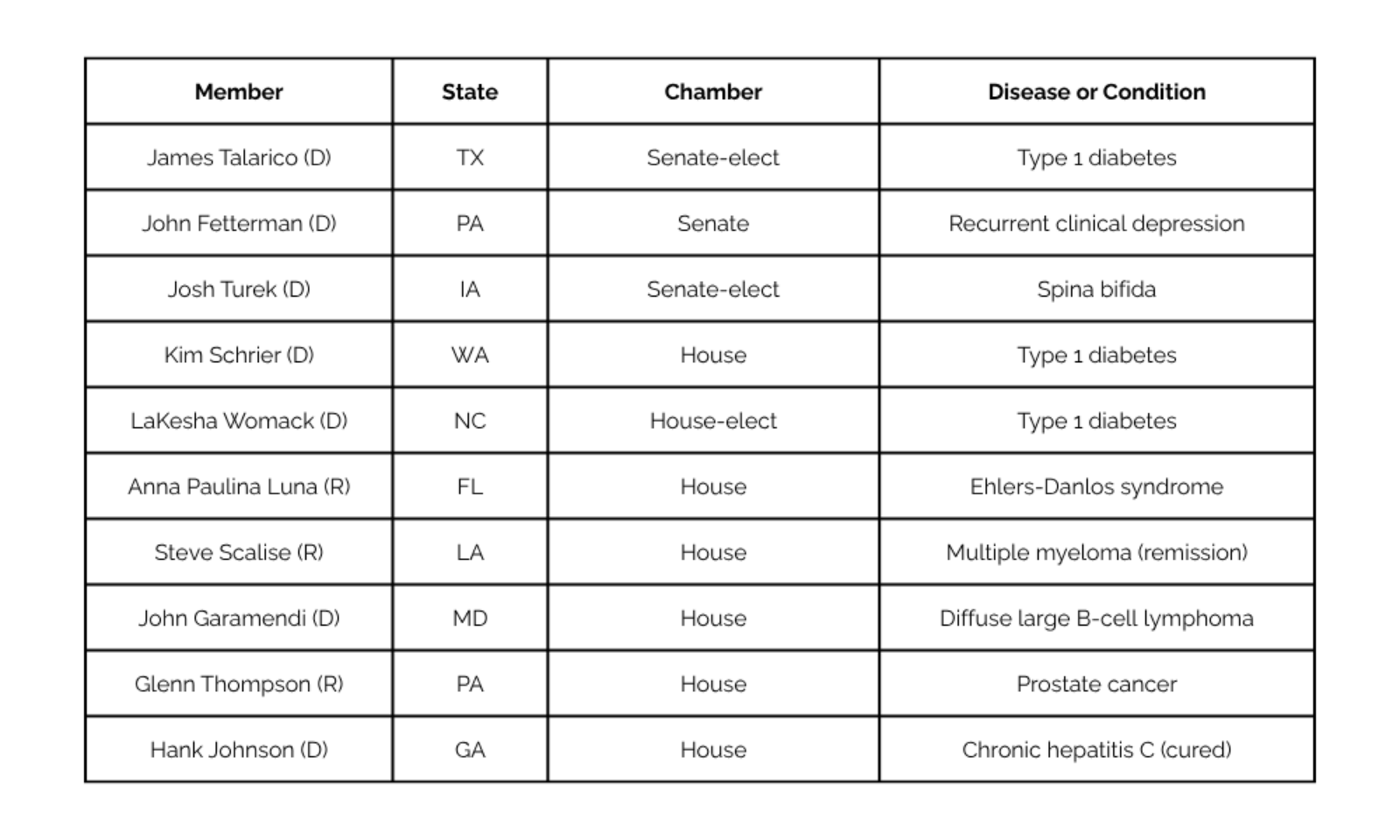
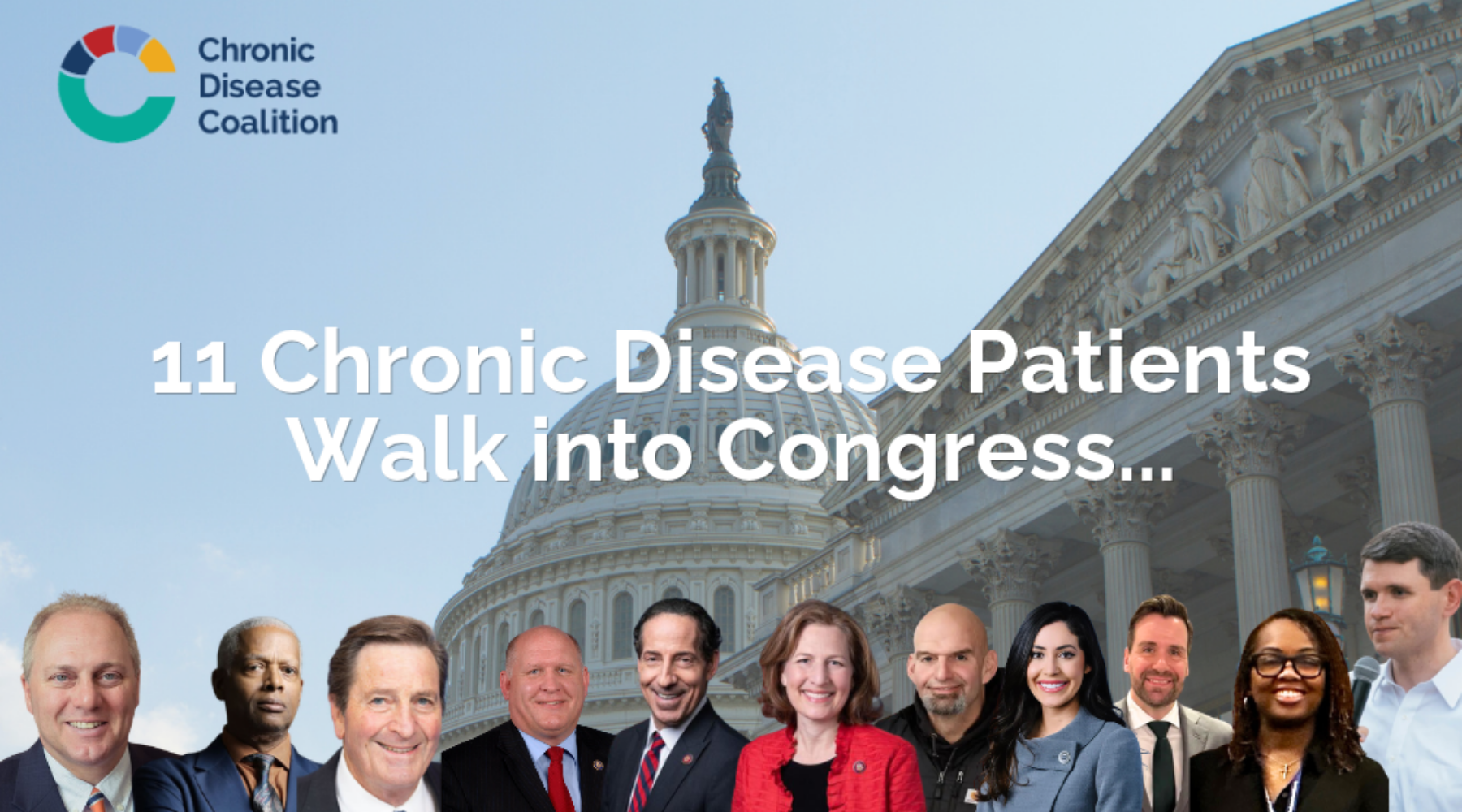
But there was another one. An eddy that rippled off the larger wave. Eleven members of the 120th Congress have self-identified as chronic disease patients.
When I first started paying attention to politics in the 80s, it was still a major no-no to go public about serious medical conditions. Think FDR hiding his polio-induced need for a wheelchair vs. Josh Turek, the senator-elect from Iowa, who is a Paralympic basketball gold medalist.
Medical imperfection was construed weakness, a sign of instability, and no one wants to add another variable to an arena everyone is happiest with when it is boring and predictable. And while chronic illness can be that at its best, it is not uncommon to be anything but.
So, yay, we have representation! But what does it mean?
The thing about healthcare is that it is built on assumptions. Clinicians or industry or lawmakers say a patient needs X, so we will provide it. But no one actually asks if X is what the patient needs. It could be X+1 or even B. Policies that don’t quite hit the mark are written and made law. Resources are invested that don’t deliver expected impact. With 11 first person sources now easily accessible, I expect that there could be a very valuable kind of re-education for both Congressional members and staff, who are often the ones to research and write policy.
Those of us in the patient advocacy space have known the damage these types of assumptions can cause for a long time. Access barriers, rising patient and caregiver burden, marginalization of already underserved populations. It’s why we have been fighting for increased patient participation in every stakeholder sector. We can help with that.
Of course, the presence of 11 chronic patients does not guarantee 11 advocates. But it does incorporate a level of awareness that has been building within each of them for the entire length of their chronic experience, and that is likely to come through in their approach and support of particular policies, even if it is subconscious. It happens to all of us chronic patients eventually.
Maybe now that we have decisionmakers who do know what it’s like to be us, that door will creak open another inch.
I would take a centimeter, though.
120th Congress (2027–2029): Chronic Disease Roster