
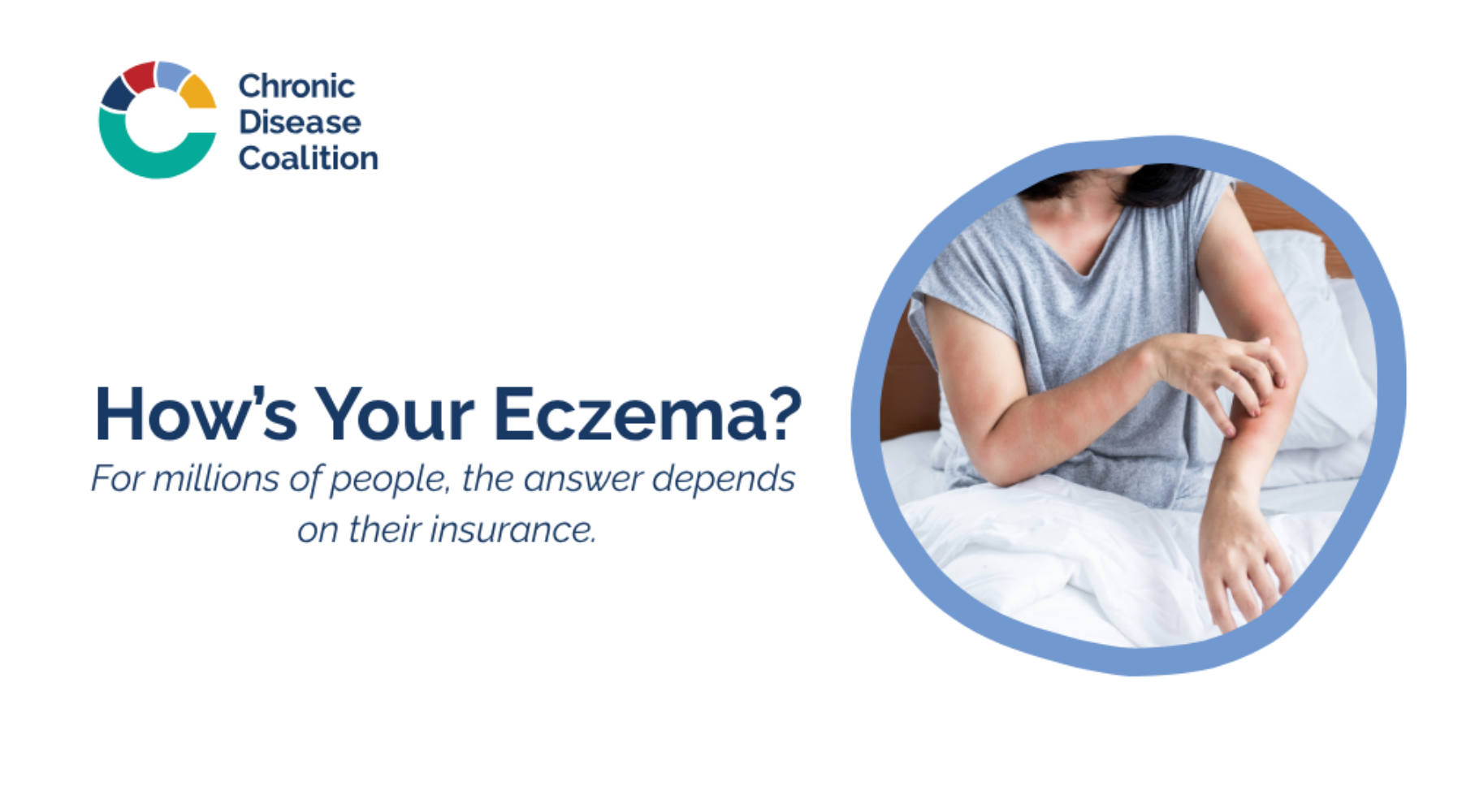
October is Eczema Awareness Month, and this year's theme asks a simple question: "How is your eczema?" For millions of people, the honest answer depends on whether their insurance lets them start, and stay on, the treatment their doctor prescribed.
A recent survey from the National Eczema Association (NEA) found that nearly 40% of patients and caregivers hit at least one coverage problem in the past year, and 15% never started a prescribed medication because of insurance barriers. The same pattern affects nearly every chronic condition treated with biologics or specialty drugs, including psoriasis, arthritis, inflammatory bowel disease, multiple sclerosis, lupus, hemophilia, and cystic fibrosis.
Two bipartisan bills would change that.
The Safe Step Act fixes "fail first."
- Many insurers make patients try and fail on cheaper drugs before covering the one their doctor prescribed. This is called step therapy.
- The bill doesn't ban step therapy. It requires employer health plans to offer a clear, fast exceptions process: an answer within 72 hours, or 24 hours in an emergency.
- Most states already have these protections, but they don't reach self-funded employer plans, which cover millions of Americans.
The HELP Copays Act makes all copays count.
- Many patients rely on copay assistance to afford specialty drugs.
- Some insurers and pharmacy benefit managers take that assistance but don't count it toward the patient's deductible or out-of-pocket maximum.
- When the assistance runs out mid-year, patients are hit with their full deductible. The bill requires that assistance to count.
These bills help patients get the right drug and afford it all year.
I recognize I come from a place of privilege as I have not had to battle a step therapy policy, [but I also] recognize that many other patients cannot absorb the cost of important drugs due to the price of these medical necessities. I have seen people develop topical steroid withdrawal from drugs they have had to take before insurance would approve the proper treatment. This is exactly why I know that having exceptions to step therapy is a simple matter of patient safety. Patients with eczema, dermatitis, and other chronic inflammatory skin conditions deserve timely access to treatments that are appropriate for their individual circumstances. - Milli Garala, Coalition Ambassador
Congress is in recess for the upcoming elections, so your members of Congress are back home and listening to constituents. When they return in November for the lame-duck session, they'll weigh end-of-year health care packages. Advocates have pushed both bills for packages like these before (The Safe Step Act came close in 2024).
What You Can Do
What lawmakers hear from home during Eczema Awareness Month can shape what makes the year-end cut. One bill helps patients get the right treatment. The other helps them afford it all year. Before October ends, email your members of Congress or call their district offices. Ask them to cosponsor both bills and to champion them in any lame-duck health package.