
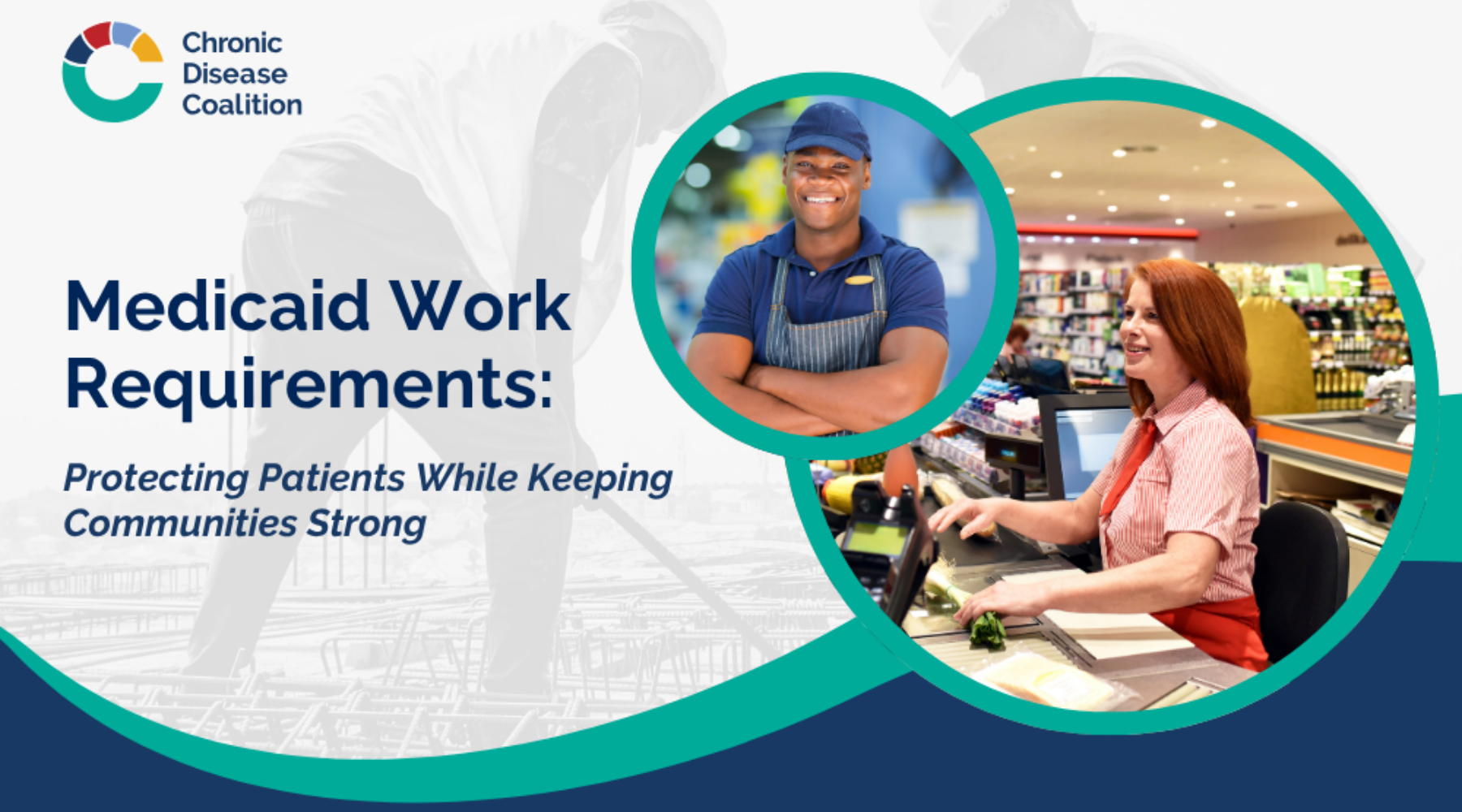
When people talk about Medicaid work requirements, they often talk about who isn’t working. But for people managing chronic disease, the more important question is: what makes work possible in the first place?
The answer, for millions of Americans, is basic healthcare.
A landmark study published in JAMA Health Forum in 2025 tracked Michigan Medicaid enrollees over several years. Among those who started with significant health burdens, the share who were employed nearly doubled as their health improved with coverage—from 26% to 47%.
The researchers were direct: “Medicaid expansion doesn’t discourage work—it helps make it possible.”
This is the reality chronic disease patients live every day. When medication is affordable and appointments are covered, people can manage their conditions. They can show up. They can contribute. When coverage disappears, conditions worsen, emergencies mount, and the ability to work often disappears too.
New federal law is changing the rules.
Signed into law in July 2025, H.R.1 requires most adults on Medicaid aged 19–64 to document 80 hours per month of work, job training, volunteering, or other qualifying activities to keep their health coverage, starting January 1, 2027. The law includes exemptions for those who are “medically frail,” caregivers of young children, pregnant individuals, and others.
The Chronic Disease Coalition understands why people across the political spectrum care about this issue. Encouraging work and community participation are values many Americans share. Most chronic disease patients share them too.
But the details of implementation are critical. Research projects show that under most scenarios, millions of Americans will lose Medicaid coverage—not because they fail to qualify, but because of administrative hurdles and reporting deadlines. Another study found that among Medicaid enrollees aged 51 to 64, those with the highest chronic disease burden were the least likely to be working—and the most likely to lose coverage under work requirements.
Another challenge is that most states will need entirely new systems to identify medically frail enrollees who qualify for exemptions—a process that is complex, costly, and puts people at risk.
We’re asking you to take action.
Send a letter to your state and federal elected officials asking them to:
- Define medical frailty broadly and implement exemptions that reach everyone who qualifies
- Protect patients with chronic conditions from losing coverage through paperwork errors, not policy
- Ensure implementation does not destabilize community health providers who depend on Medicaid funding
- Use every available data tool to automatically exempt eligible individuals
- Recognize that keeping patients healthy is what makes communities stronger
Do you have a story about how Medicaid coverage affects your ability to work, care for your family, or participate in your community?
- Share your story with the Coalition.
- Join the Coalition’s advocacy network to stay engaged on policies that affect patients.
- Join us as Ambassador and advocate for chronic disease patients in your state.
Medicaid is not a barrier to work. For millions of people with chronic disease, it’s the bridge that makes work possible. Smart, compassionate implementation of these new rules can honor both values—encouraging participation while protecting those who need care most.
Want to learn more?
Read:
- Politico: 'A crisis in the making': Nebraska races to impose work requirements on Medicaid
- The Commonwealth Fund: Medical Frailty Exemptions Will Help with Medicaid Work Requirements
- Fierce Healthcare: States face another challenge with Medicaid work rules: Short staffing
- KFF Health News: Food Stamp Work Rules Don’t Increase Employment, Researchers Say
Watch: