
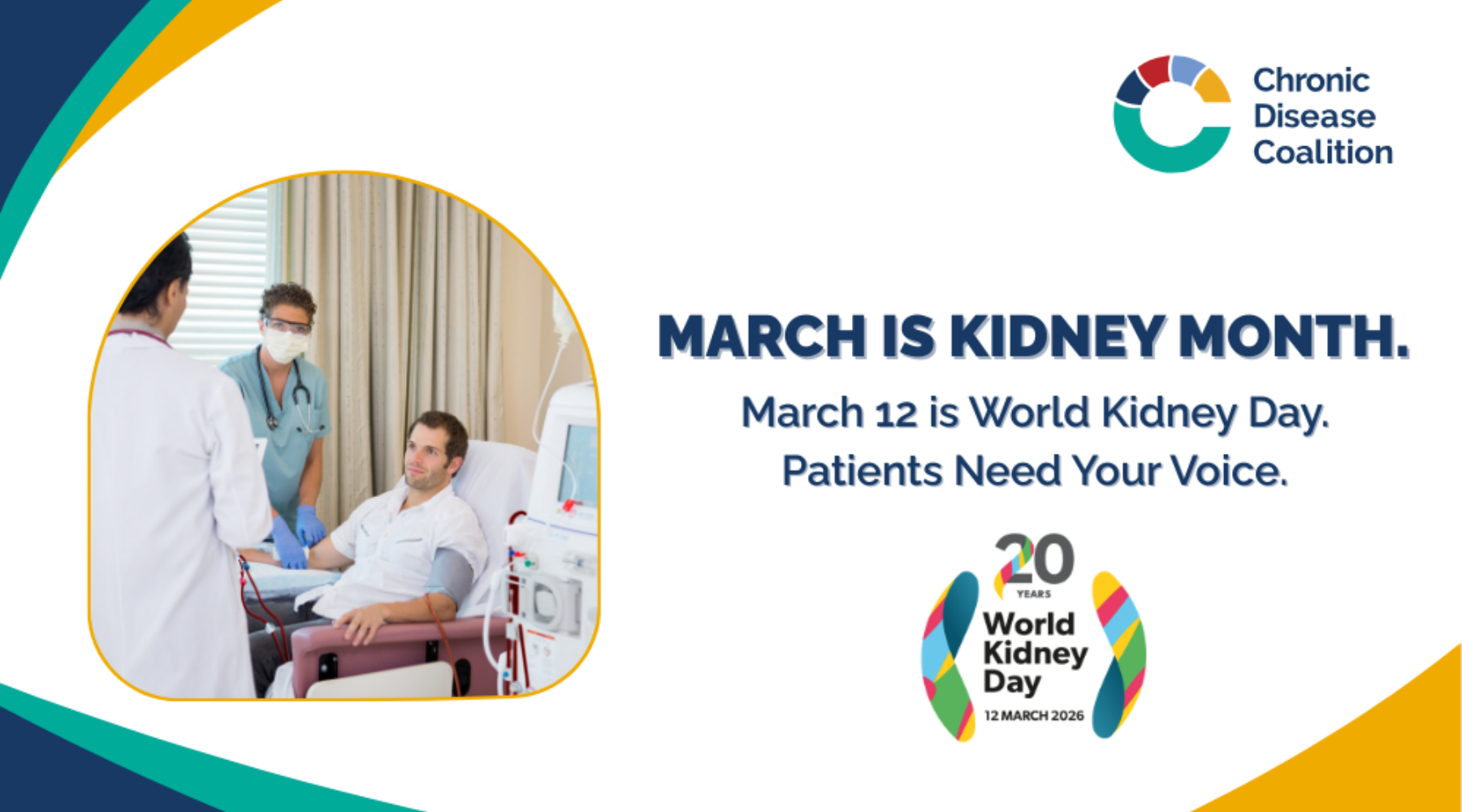
March is National Kidney Month and March 12 is World Kidney Day — a time to recognize the millions of Americans living with kidney disease and the policies that affect their ability to access care.
Chronic kidney disease often develops silently, but its consequences are life-altering. For many patients, treatment means lifelong medication, regular monitoring, or dialysis multiple times each week. Access to consistent, affordable care isn’t optional — it’s the difference between stability and crisis.
Kidney disease is also an area where prevention and early intervention can make a profound difference. Early screening for high-risk populations, better management of conditions like diabetes and hypertension, and improved patient education can help slow or prevent the progression of kidney disease.
Across the country, lawmakers are debating policies that will shape the future of healthcare access for people living with chronic conditions. For kidney patients, these decisions can determine whether treatments remain affordable, whether insurance coverage is stable, and whether patients can continue receiving the care they depend on to stay healthy and active in their communities.
At the Chronic Disease Coalition, we work to keep patients at the center of policymaking by advocating for reforms that improve access, affordability, and representation in healthcare. Kidney disease needs all three.
This Kidney Month and World Kidney Day, we’re asking you to take action.
Your experience is crucial in helping elected officials understand the impact of kidney disease on individuals, families and communities. When lawmakers hear directly from the people affected by healthcare policies, they gain a clearer understanding of how policy decisions affect real lives.
Policies that support preventive care and early treatment not only improve patient outcomes, but can also reduce long-term healthcare costs associated with advanced kidney disease and dialysis. Kidney transplants truly come as life-saving miracles for thousands of families a year, helping people get off of dialysis and live long and healthy lives. Those medical advances are good for everyone, but we still need good science, policies and systems to make them work.
Unfortunately, people who are managing kidney disease continue to have problems with high costs, prior authorization requirements, and insurance policies. Insurance delays aren't just inconvenient - they interrupt treatment and can make life significantly worse for people with chronic kidney disease.
Send a letter to your state and federal elected officials now, asking them to:
- Support early screening and preventive health strategies
- Understand how the fast progression of kidney disease can complicate access to care
- Encourage and support transplants with insurance protections for living donors and ensuring transplant drug coverage
- Recognize and protect those who are medically fragile within Medicaid eligibility requirements
- Support and engage state-based Chronic Kidney Disease Task Forces
Do you have a kidney story you’d like to share with the Coalition? You can:
- Share your story about the challenges of managing kidney disease or another chronic condition.
- Join the Coalition's advocacy network to stay informed and engaged on policies that affect patients like you.
- Join us as Ambassador and get more actively involved in advocating for care.
Every email sent, every story shared, and every conversation with a policymaker helps ensure that healthcare decisions reflect the real needs of patients.
Kidney disease affects individuals, families, and entire communities. When patients stand together and speak out, we can move healthcare policy in a direction that prioritizes access, affordability, and stability for everyone living with chronic conditions.
ICYMI
Want to learn more?
Read:
- I Found My CKD Diagnosis in a Hospital Form
- The Importance of State-Level Chronic Kidney Disease Task Forces
- 80 Years After Dialysis Was Invented, Access is Shrinking – With Impacts Beyond the Kidney Community
- From one Firefighter to Another - How Kidney Donation Saved Two Lives
Watch: