
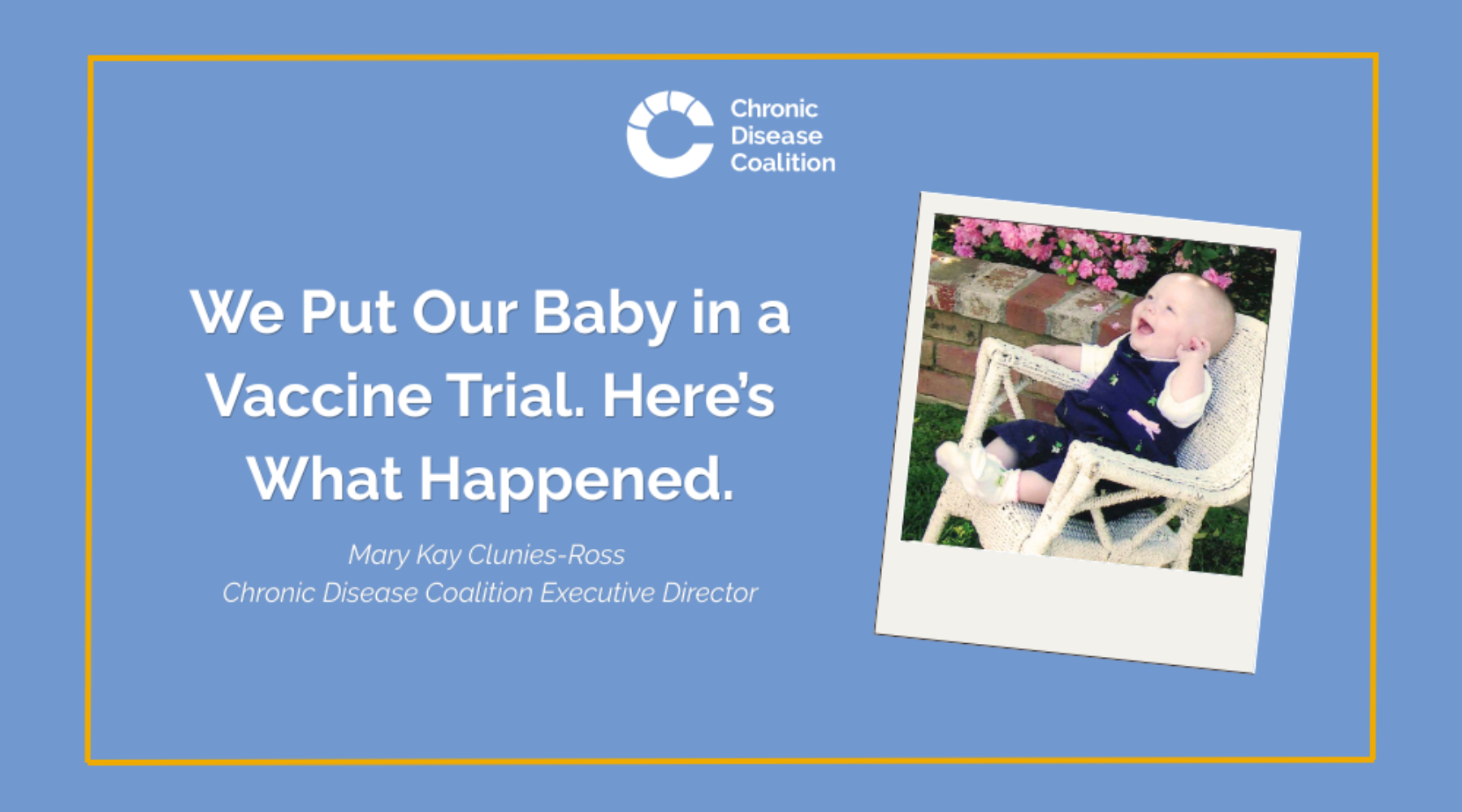
When my daughter was an infant, we were asked to be in a clinical trial for pediatric vaccines.
The study tested whether the varicella vaccine for chickenpox could be combined with the standard, long-established MMR vaccine.
We didn’t hesitate.
First, they drew her blood to make sure she didn't already have antibodies. Then she received a vaccine dose, but because the study was randomized, we didn't know whether she'd been given the single MMR or the combined MMRV.
She got multiple doses over a few months, and every time, we kept records of her temperature and side effects, like rashes or swelling.
I will never forget how much she hated having her temperature taken. At least once a day for a month at a time, we had to put a thermometer under her armpit and hold her arm down for a good 30 seconds. It didn’t hurt, but she fought it anyway.
When the trial was done, she had her blood drawn again, so researchers could re-test it for antibodies and confirm her immune system was building immunity against all four diseases. She screamed, wiggled, and cried during the blood draw.
She might have also gotten some extra vaccine shots, just to be sure she'd be as protected as any other baby.
The protocol details are a little fuzzy 20 years later, to be honest. But the struggle to take her temperature, the record-keeping, the extra visits, the blood draws, the crying — those details are crystal clear.
Also crystal clear: We trusted our baby to a clinical study because vaccines have kept everyone we know safe from measles, mumps, and rubella for decades. The MMR shot has been given since 1971, which means I got one as a baby too, along with millions of others. Because of that, we had the privilege of growing up in a world where our friends weren’t killed or permanently disabled by those diseases.
We also volunteered for the study because we knew the dangers of chickenpox, and because we knew that combining the vaccines would make it easier for future parents to protect their babies from all of it.
The vaccine study did not make my baby happy. It didn't make her comfortable. We were probably taking a risk that might have had long-term consequences, and we would have had to live with those. We did all of it, willingly.And it worked! She’s never gotten measles, mumps, rubella or chicken pox, and the combined shots are safe and in use today.
Personally, I feel strongly about vaccines and about following the guidance of the American Academy of Pediatrics, which is based on decades and hundreds of vaccine effectiveness and safety studies.
Professionally, while measles, mumps, and rubella are not technically chronic diseases, they can cause serious, chronic, long-term damage — brain disorders, deafness, infertility, and birth defects.
The Chronic Disease Coalition supported access to the COVID vaccine from the beginning, because our patients are among the most vulnerable to getting even sicker from new viruses. Many chronic disease patients have had to add "long COVID" to their list of conditions, and it's become yet another barrier to a vibrant life. Americans already have enough health problems — we don't need new generations to suffer with completely preventable diseases. The Coalition will continue to advocate for rigorous science, well-tested vaccines, effective vaccines scheduled and affordable access to all of it. That includes combined vaccines like MMR/MMRV.
In her infant, comfort-seeking mind, and in that moment, our crying daughter might not have thought we were good parents.
But good parents also need to be good citizens, and that means looking out for everyone else. Vaccines are so good at that. They help us protect our children from serious illness, but also protect everyone in our families and broader communities. In the long run, I hope she can be proud of her parents for that.