
As we look toward 2026, the Chronic Disease Coalition (CDC) is focused on ensuring people living with chronic disease can access the care they need to live healthier, more productive lives.
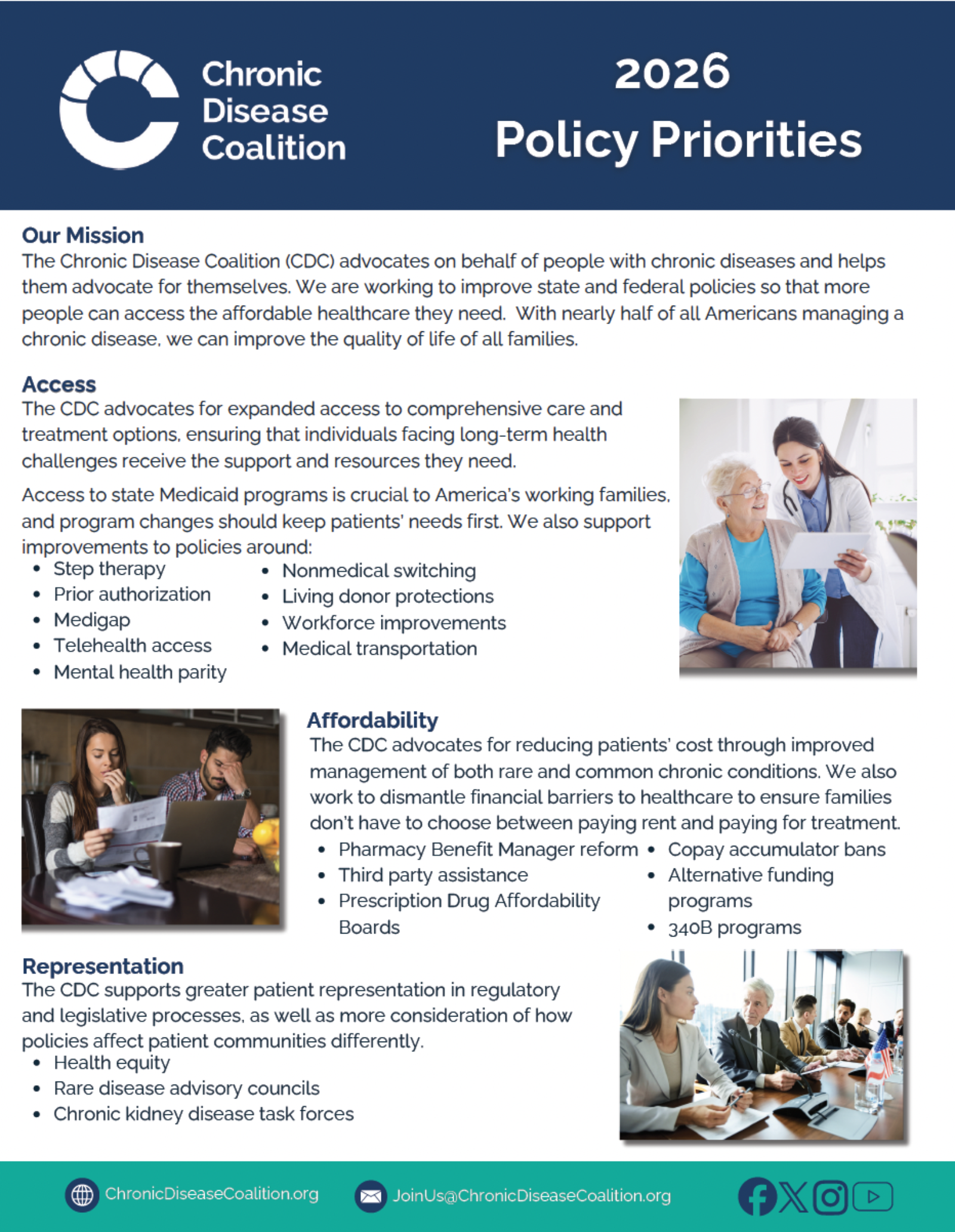
This year’s policy priorities reflect what patients consistently tell us: health coverage must be stable, services must be high value, and cost savings should be at the patient level.
At the center of this work this year is ensuring access to Medicaid.
Protecting Access to High-Value Care Through Medicaid
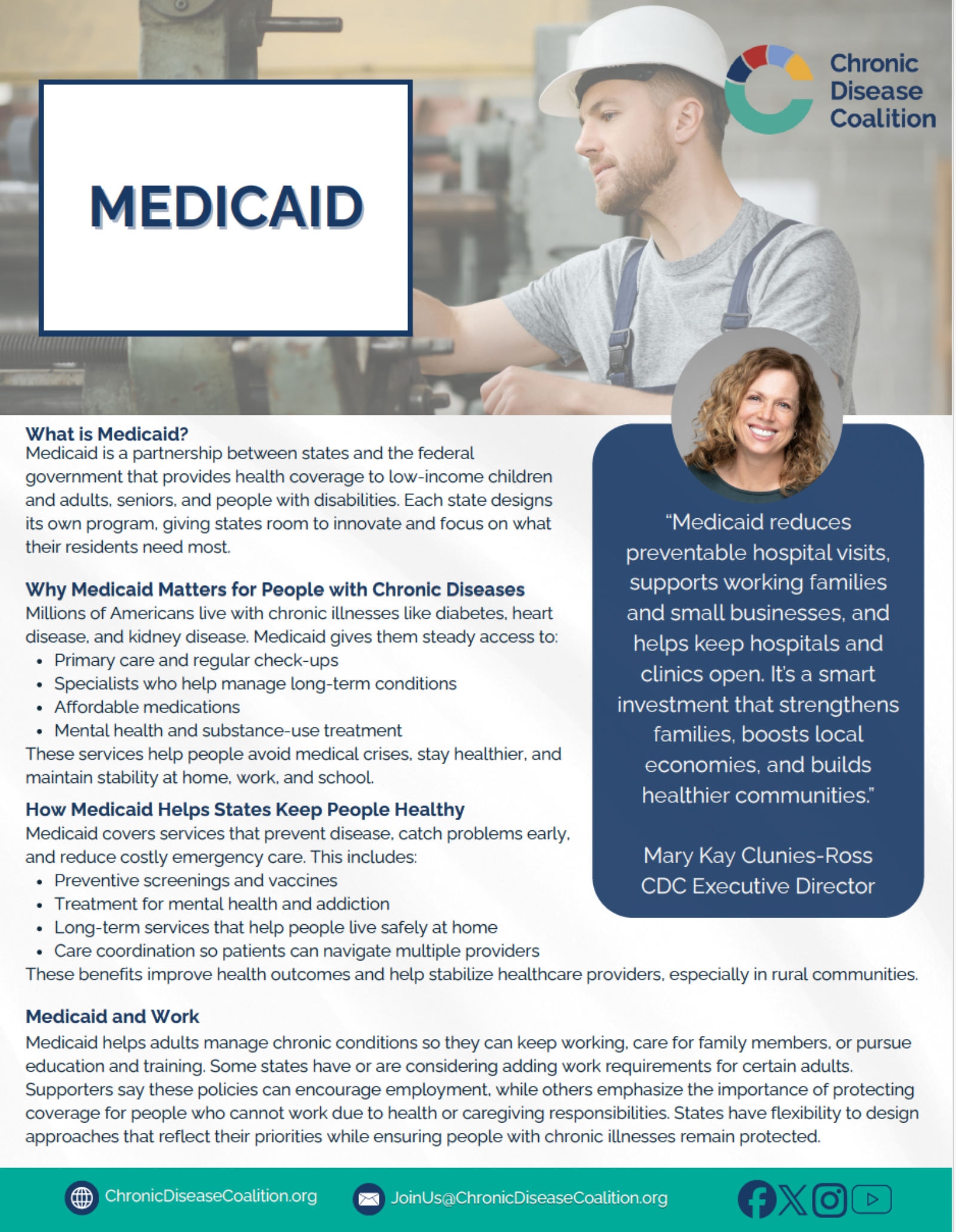
Medicaid is a lifeline for millions of people living with chronic disease and their families. It provides access to preventive care, specialty services, prescription medications, and care coordination that help people manage complex conditions and avoid costly hospitalizations.
In 2026, we will continue advocating for policies that protect and strengthen access to high-value Medicaid services. That means ensuring coverage is comprehensive, benefits are evidence-based, and patients are not forced to navigate unnecessary barriers to care. When Medicaid works well, patients are healthier—and the system is more efficient.
With less federal support, we know that many states will be facing hard choices. The good news is that we have decades of research to help guide decisions around cost-effective care. Successful strategies that serve patients and reduce costs include:
- Primary care, good disease management and care coordination allows for early intervention and better management of chronic conditions
- Preventive care like the Diabetes Prevention Program, vaccines and regular screenings keep infectious diseases from becoming chronic diseases and allow for the early intervention that saves money and lives
- Home-based and other site-of-care delivery eases the burden on patients and reduces the need for large facilities
- Behavioral health integration
- Telehealth
A Realistic Approach to Work Requirements
The Coalition recognizes the importance of policies that support work and independence. People with chronic diseases overwhelmingly want to work, contribute, and participate fully in their communities. At the same time, managing a serious health condition often requires ongoing treatment, medication, and regular access to care.
Any discussion of Medicaid work requirements must reflect this reality. Policies should explicitly recognize people who are disabled or managing chronic and complex diseases. Coverage should support health first, because access to care is what makes work possible, not the other way around. Punitive requirements that lead to coverage loss ultimately undermine workforce participation rather than promote it.
Cost Savings That Matter to Patients
Healthcare affordability remains a top concern for people living with chronic disease. Too often, "cost savings” are measured at the system level while patients face higher out-of-pocket costs, delayed care, or reduced access to needed treatments.
Our 2026 priorities emphasize patient-level savings. That includes policies that lower out-of-pocket costs, improve access to affordable medications, and invest in services that prevent disease progression. True value in healthcare means patients can afford to follow their care plans and see real improvements in their health.
Patients Belong at the Table
Across all of our policy work, one principle remains constant: patients must have a seat at the table. People living with chronic disease bring essential insight into what works, what doesn’t, and where unintended consequences can arise.
Whether discussing Medicaid reforms, affordability strategies, or care delivery innovations, patient voices should inform policy decisions from the start.
Looking Ahead and Staying Informed and Engaged
The Coalition’s 2026 policy agenda is built upon our years of listening to patients and working alongside other advocates, providers, and policymakers. We believe a strong healthcare system is one that centers people, values access to high-quality care, and measures success by improved health and stability for those who need it most.
Patient-led advocacy and personal relationships are more important than ever.
At the Coalition, we are working every day to make it easier for you to be a well-informed advocate. The more you tell your story, the more you help others as well.
We have a toolbox to help you, wherever you are and whatever time and energy you have to offer:
- Sign up for our newsletter. Twice a month, you’ll get our newsletter with about 5 quick items to know, be inspired by, or take action on. You’ll also get occasional updates about key legislation in your state.
- Follow us on Facebook, Instagram, LinkedIn or X for a mix of patient stories, policy trends, and timely actions you can take in your state.
- Visit our website to see:
- Our Policy Map. See which states are working on legislation in our key areas
- Our Contact Your Elected Leaders Page. Use our easy forms to send a letter to your elected representatives. It’s a short list now, but as bills are introduced across the nation, the list will grow. We have suggested language to make it easy, but you’re also free to edit it and tell your own story. Your letter goes ONLY to your elected representatives.
- Our Advocacy Toolkit. Learn how to get started with your advocacy efforts.
- Join our ambassador program.
- Share your story.
THANK YOU! We look forward to working together to make meaningful and lasting improvements to our healthcare system.